



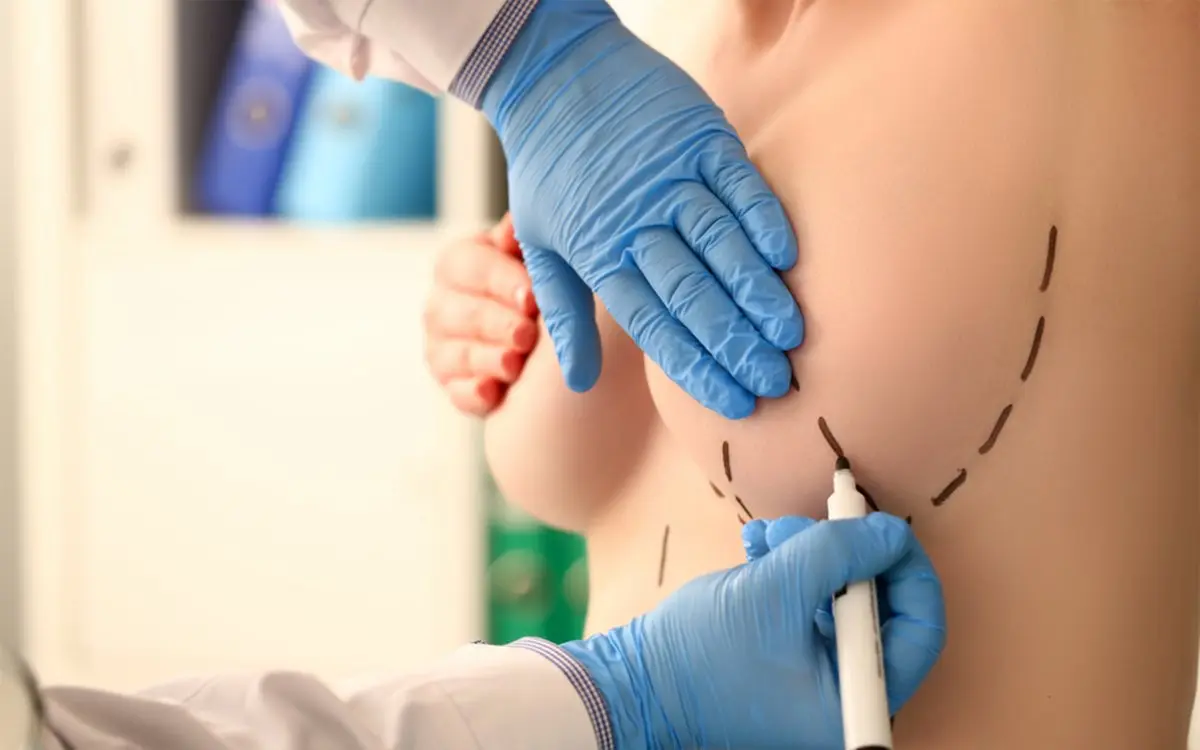
Arms and thighs are among the most requested areas and among the least forgiving. The tissue there is soft, mobile and often visible in clothing, so small irregularities are easier to notice.
They are also areas where the right result depends on choosing the operation that suits the tissue, rather than the one that is requested most often.
How arms and thighs differ from the abdomen
The abdomen holds fat in relatively defined layers over a firm wall. The inner thigh and the upper arm have thinner skin, more movement and less underlying support.
That combination means contour changes show quickly, and so do mistakes. Gentle, staged removal and careful attention to the transition between treated and untreated areas matter more here than total volume removed.
The options, and when each applies
- Liposuction for localised fat under skin that still has good tone.
- Skin removal, sometimes combined with a lift, when laxity hangs below the contour.
- Combined planning when fat and skin both contribute, often treated in stages.
- No intervention when the concern is proportionate to your build and surgery would add risk without meaningful change.
Where the limits honestly sit
Contouring can refine a silhouette. It cannot convert a soft, lax inner thigh into a firm one, and it cannot remove cellulite, which involves the skin and its supporting bands rather than fat alone.
The upper arm has an additional consideration: the thin skin and proximity to nerves and vessels mean the margin for aggressive removal is smaller. Conservative treatment usually looks better than maximum treatment.
Recovery and travel practicalities
Both areas are managed with a compression garment and a graded return to activity. Pressure on the thighs while sitting, and repeated arm movement at work, influence how comfortable the early stage feels.
If you are flying in for surgery, plan your stay around the stage when the garment is worn continuously and dressings are changed, and arrange for someone to help you during the first days.
When we advise against this procedure
We decline or postpone arm and thigh contouring when skin laxity is the dominant feature and the request is for liposuction alone, when weight is unstable, when there is a history of clotting problems or poor wound healing, or when the planned removal would risk an irregular surface.
We also say no when the goal is a shape that the underlying anatomy cannot produce, because the honest answer protects you from a recovery you would regret.
Frequently asked questions
Can liposuction fix cellulite on my thighs?
No. Liposuction removes fat, while cellulite involves the skin and its fibrous bands, so the dimpling usually remains.
Which is harder to treat, arms or thighs?
Both are delicate. The inner thigh has thinner skin and more movement, while the upper arm sits close to important structures, so each needs conservative planning.
Will I have visible scars?
Access points are small and placed where clothing can cover them. Their appearance depends on your healing and on how they are cared for.
Do I need a garment afterwards?
Yes, a compression garment is part of standard aftercare in these areas. It supports the tissue and helps the skin settle.
Can I combine arms and thighs in one trip?
Sometimes, if your health allows and the anaesthetic time stays reasonable. Otherwise we stage the surgery to keep recovery manageable.
How soon can I fly home?
This depends on your healing and on your surgeon assessment, and some airlines have their own requirements. We plan the earliest sensible date with you.
Patients who travel for arm and thigh contouring usually need the same practical arrangements as any body procedure: a compression garment fitted before surgery, written dressing instructions, a confirmed review before departure and a remote follow-up schedule. If a garment does not fit once you are home, tell us rather than improvising, because fit is part of the treatment.
How we approach this at Jelan Clinic
At Jelan Clinic we examine how the tissue moves, not only how it looks standing still. Photographs, measurements and a conversation about how you dress and what you want to change shape the plan.
When a patient travels a long distance, we discuss whether one area or two should be treated in a single visit, and how the garment and dressing changes will be managed once you are back home. The plan is written down before you book.
Next step
Send photographs of your arms and thighs from more than one angle, and tell us what you would like to change in ordinary clothing. We will explain what is achievable, what is not, and how the recovery would be arranged around your trip.
How measurements and garment planning work
Arms and thighs are treated conservatively for a reason. We use measurements and standardised photographs to record the starting point, and we plan how much can be removed without leaving a hollow or an abrupt transition.
Garment planning matters here too, especially for the inner thigh, where sitting pressure during a long flight home can cause discomfort. Fit, padding and a realistic travel date are discussed before surgery rather than after it.
Preparing well is not complicated. Gather your health information, your medication list and any previous operative notes, write down your questions, and give yourself time to consider the answers.
We would rather answer a difficult question early than discover it after surgery, and we would rather tell you that a procedure is not right for you than accept a plan we cannot stand behind.
This article is educational information only. It does not diagnose, does not recommend a treatment for you, and does not promise any outcome.
A prior medical consultation is mandatory; the final decision rests with our specialised medical team after assessment.
Would you like to know what can be achieved in your case?
Send your name and WhatsApp number — we review your case with our specialised medical team and send a written plan: what can be achieved and what the programme includes. No commitment.
Medical details are determined after assessment by our specialised medical team; the final decision rests with them.
Are you a suitable candidate?
This information is educational only, and every patient is different. Send us your photo and details, and we will review them with the doctor to clarify: whether the procedure is suitable, what can be achieved, and the next step.
Prior medical consultation is required; the final decision rests with the doctor after assessment.