



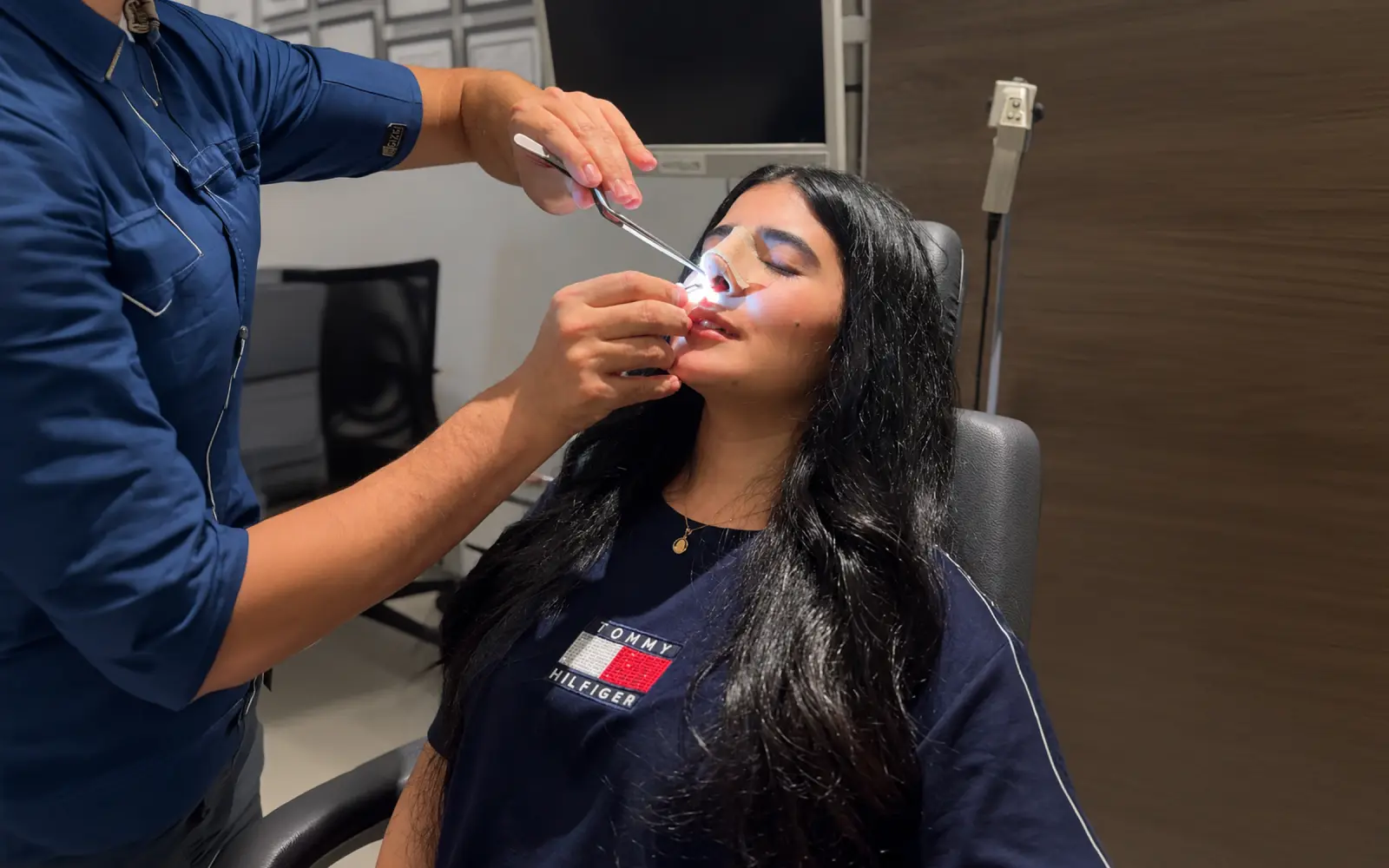
Many patients discover a septal problem only when they begin asking about the shape of their nose. Others have known about their breathing for years and assumed nothing could be done.
When appearance and airflow are both affected, treating them as one plan is usually more coherent than separating them.
What the septum does
The septum is the wall of cartilage and bone that divides the nose in the middle. It supports the bridge and the tip, and it shapes how air moves through each side.
When it is deviated, one or both sides narrow. That can cause blockage, mouth breathing, snoring, repeated infections and a sense of pressure.
How a septal problem is identified
Assessment includes your history, how the blockage behaves over the day and across seasons, any injury, and examination of the inside of the nose. Imaging or a specialist opinion may be arranged where further detail is needed.
It also matters whether allergy, polyps or another cause is contributing, because that changes the treatment.
Why one plan is often better than two
- Shared structures: the septum supports the bridge and tip, so changes to one affect the other.
- One recovery instead of two separate healing periods.
- Better balance between appearance and airflow than addressing them in isolation.
- Fewer surprises, because the plan accounts for how reshaping affects breathing.
What the combined recovery involves
The recovery follows the usual rhinoplasty stages, with additional attention to nasal congestion while internal healing takes place. Splints or internal support may be used, depending on the technique.
Breathing typically improves as swelling and crusting settle. We describe the stages honestly rather than promising an immediate change.
When we advise against this procedure
We advise against surgery, or postpone it, when the breathing complaint needs medical investigation first, when allergy or another condition is the main cause, when the nose is still changing after a recent injury, or when the airway is so compromised that a specialist review should come before any cosmetic planning.
We also decline a cosmetic plan that would narrow the airway further, however attractive the shape might appear on paper.
Frequently asked questions
Can a deviated septum be corrected at the same time as rhinoplasty?
Yes, and it is commonly done together so that appearance and airflow are addressed in one plan.
Will correcting the septum change how my nose looks?
It can, because the septum supports the bridge and tip. This is planned for rather than discovered afterwards.
Does the operation improve snoring?
It may improve airflow, but snoring can have other causes. Those need their own assessment before surgery is expected to help.
Is the recovery longer when both are treated?
It follows the same stages as rhinoplasty, with extra care around congestion while the inside heals.
Do I need a scan before surgery?
Sometimes imaging is helpful, depending on the examination findings and your history. It is arranged where it adds useful information.
I live abroad. How is a combined plan followed up?
With scheduled remote reviews and a written plan, plus local examination if a concern needs hands-on assessment.
If you have had nasal surgery or a nasal injury before, tell us at the first conversation, because it changes how the septum and the external shape are assessed. Preparation for combined surgery follows the same path as any rhinoplasty: history, examination, explanation, then a written plan, with a local specialist involved at home when that is useful for you.
How we approach this at Jelan Clinic
At Jelan Clinic, the airway is assessed in every rhinoplasty consultation. We document what you can breathe through, examine the septum and valves, and explain how the intended shape changes would affect airflow.
Where a functional problem needs another specialist, we say so and coordinate rather than proceed. For international patients, the combined plan, the recovery stages and the remote follow-up schedule are all provided in writing before travel.
If you have previous imaging, allergy testing or notes from an ear, nose and throat specialist, include them. Those details help us see the whole picture and explain how a combined plan would work, without asking you to repeat tests you have already had.
Next step
Send photographs and describe your breathing clearly: which side is affected, when it is worst and whether it followed an injury. We will explain how a combined plan would be assessed for your case.
Preparing for a combined plan
Preparation for combined surgery is much like preparation for rhinoplasty, with additional attention to anything that affects the airway, such as allergy management and the treatment of active infection.
We gather your history, medication, allergies and previous nasal treatment before making a plan, and we explain how the functional and aesthetic goals relate to one another. For patients travelling from abroad, that explanation arrives in writing before any flights are booked.
Preparing well is not complicated. Gather your health information, your medication list and any previous operative notes, write down your questions, and give yourself time to consider the answers.
We would rather answer a difficult question early than discover it after surgery, and we would rather tell you that a procedure is not right for you than accept a plan we cannot stand behind.
This article is educational information only. It does not diagnose, does not recommend a treatment for you, and does not promise any outcome.
A prior medical consultation is mandatory; the final decision rests with our specialised medical team after assessment.
Would you like to know what can be achieved in your case?
Send your name and WhatsApp number — we review your case with our specialised medical team and send a written plan: what can be achieved and what the programme includes. No commitment.
Medical details are determined after assessment by our specialised medical team; the final decision rests with them.
Are you a suitable candidate?
This information is educational only, and every patient is different. Send us your photo and details, and we will review them with the doctor to clarify: whether the procedure is suitable, what can be achieved, and the next step.
Prior medical consultation is required; the final decision rests with the doctor after assessment.